
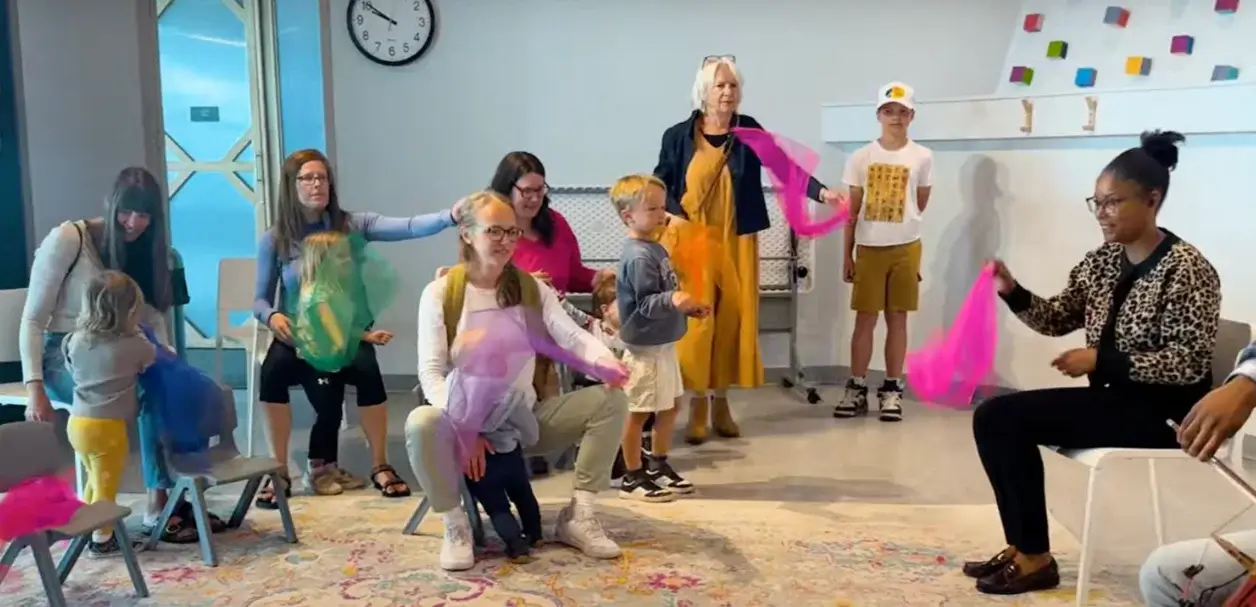
Where can toddlers collaborate with a Grammy-nominated cellist to create new music? At the Betty Brinn Children’s Museum in Milwaukee!
I participated in their Toddler Talkback program with Malik Johnson, the museum’s first Artist-in-Residence, and witnessed something remarkable: tiny hands helping create music alongside a musician who’s performed with Stevie Wonder and John Legend.
While that sounds like a once-in-a-lifetime opportunity, children’s museums create magic every day. This extraordinary collaboration illustrates what makes children’s museums so powerful for early development.
Each exhibit and experience is curated with little ones in mind, inviting them to explore, experiment, and make their own discoveries. Unlike screentime, these playful spaces spark fun, active, hands-on learning.
Why Museums Beat Screen Time Every Time
Special events aside, everything at children’s museums is designed at children’s eye level—within their reach and ready to be explored. The multisensory, accessible design of exhibits, along with the presence and voices of supportive adults, boosts kids’ experiences.
Multiple studies show that children’s museum visits foster measurable gains in:
- Language and social communication. Museum play boosts toddlers’ vocabulary, causal talk (like “if I do this, then that happens”), and storytelling skills. They also practice turn-taking, cooperation, and emotional regulation, especially when adults engage with them in supportive ways.
- Spatial cognition and exploration. Exhibits designed for hands-on engagement lead toddlers to explore more systematically, which sharpens problem-solving and spatial reasoning skills. That’s the foundation for everything from block-building to math concepts.
- Parent-child interaction. The research is clear: when parents join in with timely talk, support, or open-ended questions, toddlers gain even more. Adult involvement before or alongside a child’s exploration makes the learning stick.
Museums Build Vocabulary in Action
Here’s something many parents overlook: stepping out of your daily routine is one of the most powerful things you can do for your toddler’s vocabulary development.
While we might feel comfortable sticking to familiar activities at home, community experiences like Johnson’s cello sessions expose children to words, concepts, and ideas they might never encounter elsewhere.
During the session, toddlers heard words like cello and imagination—language that becomes the building blocks for future reading comprehension. When they see these words in books years later, they’ll have a reference point to understand them (not just sound them out) from that day they made music with a live musician.
Johnson’s artist residency culminated in a music video featuring the children’s snaps, claps, squeals, and dancing within their collaborative composition.
“I just took all of the magic that I remembered from all of the sessions, talkbacks and performances, and just put them in a song for you all to enjoy,” Malik said during the song’s release event. Imagine telling your child years later: You helped create this song with a Grammy-nominated musician.
The Real Return on Investment
Many museums offer free Community Access Days or library passes, but if possible, consider getting a membership. It’s not just about unlimited visits; it’s about making exploration a regular part of your child’s world. As Sarah McManus-Christie, the Betty Brinn Museum’s Education Director, puts it: “One of the museum’s values is to make memories that last.”
The song the children created captures this perfectly, with lyrics about imagination, reaching for stars, and being surrounded by friends at Betty Brinn. It’s a reminder that the most powerful learning happens when curiosity meets community.
Your toddler’s future literacy skills are being shaped right now—not just by the books you read at home, but by every new experience, conversation, and vocabulary word they encounter.
To make the most of your next children’s museum visit:
- Follow your child’s lead. Let them explore what interests them and then talk to them about it. Use rich, descriptive language about what they’re seeing, touching, and doing.
- Ask open-ended questions. Try: What do you think that does? or How does that sound?
- Talk about it afterward, too. Revisit the experience by recounting what you did together and listening to your child’s reflections, strengthening their memory and language.
To find a children’s museum near you, visit Findachildrensmuseum.org.
