In a world where reading matters a whole lot, yet distractions abound as never before, it’s easy to worry about our kids’ reading. Are they reading at grade level? Are they spending enough time reading? Are they reading challenging enough material?
It’s crucial to support kids to become thriving readers in the first place and then to keep reading as they get older. After all, reading helps kids of any age build vocabulary, comprehension, knowledge, empathy, and self-expression—all of which is just as important after they become fluent independent readers.
But as we encourage our kids to read, It’s easy to wonder: What actually counts as worthwhile reading?
Maybe your child devours graphic novels but avoids chapter books. Maybe they listen to audiobooks nonstop but resist sitting down to read. Or maybe your elementary schooler “reads” signs with enthusiasm but seems uninterested in tackling actual books. Even if your child reads a ton on a Kindle or phone, you may wonder if it’s quite the same as cracking open a real book.
So, do these activities count as reading? The short answer is yes—at least up to a point. Each helps your child develop vocabulary, understanding, or phonics skills. The broadest possible experience with stories, language, and printed text is ideal for developing a well-rounded reader (and person), so you don’t want them to get stuck, but all these activities can help your child grow.
Now, let’s dig into the longer answer about how children become strong, motivated readers.
What Reading Really Is (and What It Isn’t)
We often think of reading as a narrow activity: sitting still, silently “decoding” words on a page—what we commonly call “sounding out.” But reading is really about making meaning from language. That includes understanding words, following ideas, building mental pictures, and connecting what’s read to the world.
Decoding printed words matters a lot, of course—but it’s only one piece of literacy. Comprehension, vocabulary, background knowledge, and motivation all matter enormously, too. And those grow in many different ways, across many different formats. Similarly, decoding skills can develop in many ways, and sometimes bite-sized bits of text can support phonics learning even better than a book.
When we limit “real reading” to one narrow version of it, we risk discouraging the very habits that help kids grow into skilled lifelong readers.
Comics and Graphic Novels Count (Yes, Really)
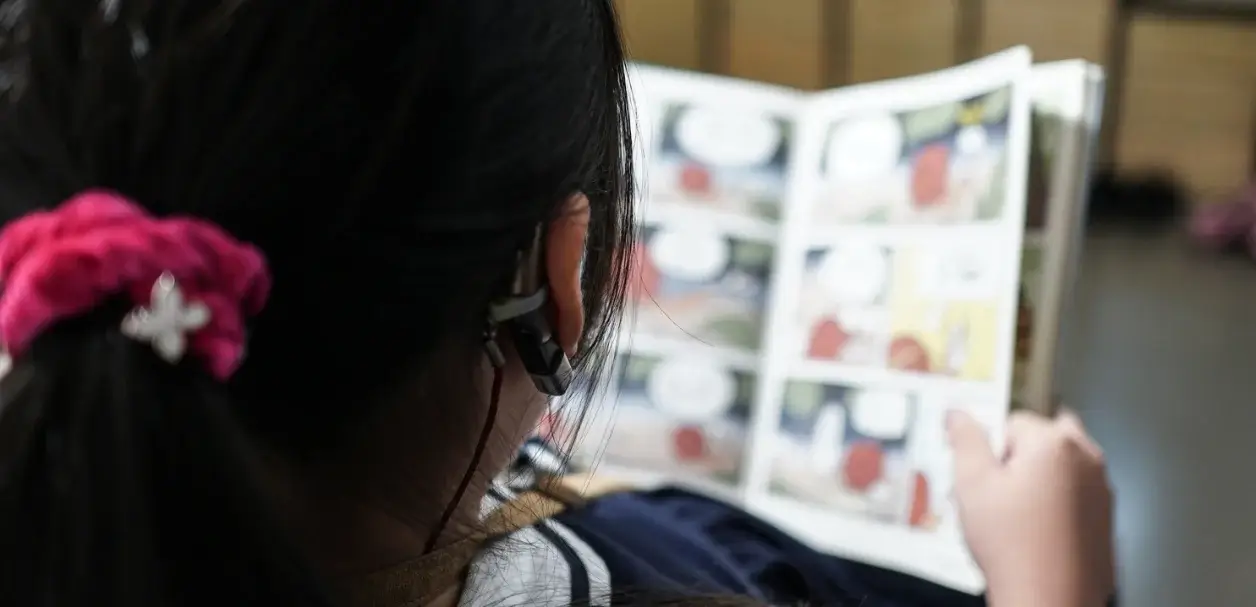
Graphic novels are sometimes dismissed as “easy,” but they ask readers to do sophisticated work. Kids must track plot, infer meaning from facial expressions and visual cues, and integrate text with images to understand the story.
That’s real reading. And for many kids, comics are what make reading feel fun, doable, and worth returning to. They build stamina, confidence, and a sense of identity as a reader—things that matter far more than the format.
If you’re concerned about your child continuing to grow and build their reading level over time (a valid concern), ask a teacher or librarian about graphic novels that can challenge them and introduce them to more advanced vocabulary or concepts. Also collect suggestions for “regular” chapter books with similar action or style to their favorite comics. Support and encourage their love of reading graphic novels, then gently stretch them.
Audiobooks Are Reading—Up to a Point
Audiobooks are often a format parents feel especially unsure about, and with good reason: If kids aren’t looking at words, is it still reading? Listening to an audio story obviously doesn’t build decoding skills or spelling knowledge—unless the child is reading along in a physical book, which can be a great option for picture books.
However, listening to stories can build vocabulary, comprehension, narrative understanding, content knowledge, attention, and love of stories. These are all tremendously valuable throughout the school years and beyond. In fact, for many children, audiobooks allow them to access stories that are more complex and interesting than what they can decode independently.
Audiobooks can be especially powerful for reluctant readers, kids who fatigue easily, or children whose listening comprehension outpaces their decoding skills. Don’t see them as a shortcut, but rather a bridge. For older kids, they can be a way to tackle challenging material, slower-paced works, or less-gripping nonfiction while working out, taking a walk, or engaging in an art project.
Similarly, oral storytelling reinforces the same skills and offers powerful opportunities for bonding and passing on cultural or familial stories, so don’t hesitate to share tales around a campfire or snuggled up at bedtime. This, too, builds your little reader’s brain and enriches their future.
E-Books Are Fantastic (But Don’t Make Them the Whole Story)
It’s more clear to most of us that e-books count as reading—even if we may yearn to see our kids curled up with a physical book rather than lit by the glow of a screen.
After all, when children read digital text on an e-reader, tablet, or phone, they’re still decoding words, building vocabulary, following narratives, and making meaning. For some kids, e-books offer real advantages: adjustable font sizes, built-in dictionaries, and easy access to a wide range of titles and abundant reading material on demand. Public libraries and lots of other services offer loads of popular titles to check out instantly as e-books, anytime, anywhere.
That said, there is something special about paper books. Physical books offer built-in boundaries that support focus. There are no messages or notifications that pop up, fewer taps that lead somewhere else, and clearer visual cues about where you are in a story.
Turning pages, feeling the weight of a book, and seeing progress unfold may help children better understand story structure and stay immersed. Research also suggests that reading on paper can support deeper comprehension and better recollection later on—at least for complicated informational texts and nonfiction. For novels and light reading, the effect may be negligible.
The takeaway isn’t either/or. E-books can be a wonderful part of a child’s reading life—absolutely no guilt required. Just make some room for physical books too.
Picture Books Aren’t Just for Little Kids
Picture books often get shelved as “baby books,” but they frequently contain rich language, layered meaning, and big ideas. Books like Owl Moon, Going Down Home with Daddy, and the uber-popular Polar Express contain lyrical language that even grownups find moving, while lots of nonfiction picture books give detailed information on various subjects. (I learned a ton reading my kids Redwoods!) True-life tales like The Oldest Student: How Mary Walker Learned to Read and The Bravest Dog Ever: The True Story of Balto also teach kids a lot about history and the world.
Picture books can also offer an engaging, lower-stress way for kids to practice independent reading. Even if your child understands advanced chapter books when you or a teacher reads out loud, they may feel more comfortable tackling picture books as they start reading on their own—and that absolutely counts as reading.
Recipes, Instructions, and Everyday Reading Matter
When your child reads a recipe, the rules to a game, street signs, or the back of a cereal box, they’re practicing functional literacy—reading with a purpose. They’re learning sequencing, specialized vocabulary, and how written language operates in the real world. They’re figuring out how to sound out (or “decode”) words and absorbing valuable information about spelling.
Environmental print like menus, signs, labels, and maps also helps kids see that reading is useful, relevant, and necessary. That sense of purpose fuels motivation far more effectively than drills ever could.
The Big Picture
So what doesn’t count as reading?
This is usually the wrong question. Not all content is equally rich, and balance does matter—but policing formats tends to backfire. When kids feel judged or corrected for how or what they read, reading becomes a performance instead of a pleasure.
Keep an eye on your child’s reading, for sure, but instead of wondering if their reading counts, ask yourself: Is my child engaged? Are they making meaning from text? Are they growing in confidence? If the answer is yes, reading is happening.
Yes, variety matters—and so does choosing the format that best supports your child’s focus, enjoyment, and connection to reading. Celebrate all the reading your child engages in, and then watch for chances to gently encourage them to take on new challenges or formats, too.
The questions then become: What challenge does my child need next to grow? Or what will keep them reading at this new age or stage?
Strong readers aren’t created by restricting what counts. They’re created by wide exposure, curiosity, and positive experiences with language.
When children are allowed to read and enjoy stories broadly—listening, skimming, rereading, laughing, wondering—they build the skills and motivation that carry them forward.