“Mommy Camp.”
I’ve announced it to my 14-year-old. She is not impressed.
As a mature teen heading into high school, the phrase “Mommy Camp” lands as many things do with her—with a sigh and a counteroffer: “Can’t I just get a workbook or something?”
Sorry, but you know that’s just not my style.
This summer, before freshman year starts, there are a few gaps in her education I’m excited to address. Subject number one: cursive writing.
Somewhere between COVID school closures and a family move across the country, cursive instruction just didn’t stick with her. And I’ll admit: I’m old school about this. I think being able to write quickly and fluidly in your own hand still matters. It’s a thinking tool. It’s an expression tool. I want her to send handwritten thank-you notes in her own distinctive script. I want her to be able to read historical documents without squinting and straining.
So we’re doing cursive. Together. Side by side. Me as the eager instructor, her as the reluctant student.
But here’s the thing: before I sit down with her, I have homework of my own.
The Part Nobody Talks About
Although I use it daily, I don’t teach cursive. I haven’t thought hard about it in 30 years. If I just print out a worksheet from the internet and march us through it, I’ll lose her interest—and mine!—in no time.
So before Mommy Camp starts, I’m doing what I always do when I want to teach something I haven’t taught before. I’m researching my options. I’m reading first-person accounts from parents who’ve taught their kids. I’m watching demonstration videos to see how experienced instructors sequence the strokes and pace the practice. I’m trying to pick the approach that’s best suited to a smart, skeptical 14-year-old who would rather be doing literally anything else.
This is just how I’m wired. It’s also the through-line of every piece of my work as a literacy advocate.
There’s a name for this. We just don’t use it much.
It’s parent development.
Child Development Gets All the Airtime
We talk constantly about child development. There are milestone charts in pediatricians’ offices, parenting books organized by age and stage, podcasts about toddlers and tweens and teens.
The entire conversation around raising kids is built on the (correct) idea that children are growing — physically, cognitively, socially, emotionally — and that the adults around them need to know what’s happening at each stage.
What we almost never name is the parallel growth happening on the other side of that equation.
Parents grow, too. Or rather: we have to grow, if we want to fully support our kids.
When my daughter was little, one of the most important things I did for her wasn’t anything I did with her. It was the work I did on myself—taking a course in the foundations of reading instruction, calling the researchers whose articles I’d read, asking each of them the same question: “What’s the one piece of practical advice you’d give a parent?” To get her from point A to point B, I had to get myself up to speed, too.
That was a decade ago, and it became the beginning of a whole new career.
Now here I am again, on a much smaller scale, with a much taller kid, getting myself ready to teach her something I don’t yet know how to teach. The subject changes. The pattern doesn’t.
What Parent Development Looks Like
It isn’t complicated. It just requires us to name it as a thing, give it some space, and not be shy about being a learner.
Here’s a simple version:
- Pick one thing to work on. Just one. Maybe it’s a skill your child missed (cursive, multiplication facts, riding a bike). Maybe it’s a topic you’ve been worried about (job stability in the AI age, mental health, screen time). Maybe it’s something about yourself as your child’s first teacher—what tests your patience, shakes your confidence, or motivates you to dig in.
- Choose how you’ll learn it. A book. A course. A podcast while you walk. An audiobook in the car. A conversation with a specialist. A milestone checklist. A long phone call with the wisest friend you have. A Substack from a real expert. Whatever fits your life and style.
- Make it small and time-bound. Before September. Over the next four weekends. By the time school starts. Whatever works for you. A learning project with no end date is a daydream.
- Don’t aim for expertise. Aim for one notch up. You don’t have to master it. You can go slow; just keep advancing. Parent development is incremental.
Why Summer Is Your Time
June invites this work, whether we name it or not. School is done. Report cards shipped. A vast, less-structured expanse unfolds for our kids. Most of us are quietly running an informal self-review—wondering what worked, what dipped, what slipped this school year. We just don’t call it parent development, so the noticing happens without the action.
Summer is the right container because the stakes are lower. There’s no curriculum our kids are behind on. There’s no teacher waiting for the email. There’s just us, our kids, and a little more time than usual to be deliberate.
For me, that means Mommy Camp. A little cursive a day keeps the woulda-coulda- shouldas away.
What’s Your One Thing?
There’s a line on my website I wrote a long time ago and still believe: Parents raise children, but we also grow ourselves. We parent best when we’re at our best.
I don’t think “best” means perfect. I think it means curious. Willing to be a beginner. Willing to say to your child, “Let me figure this out and then I’ll teach you.” Willing to sit with a research article or a YouTube tutorial after the kids are in bed because, somehow, your job description has quietly grown again.
Mommy Camp is my version this summer.
What’s yours?
Host a Virtual Book Club
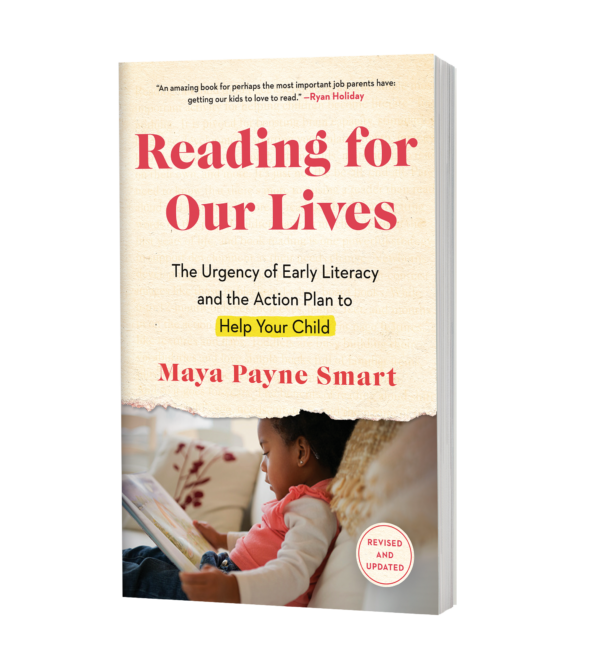
Want to dig deeper into early literacy and family literacy? Consider hosting a virtual book club where we explore these ideas together.
Learn more.