
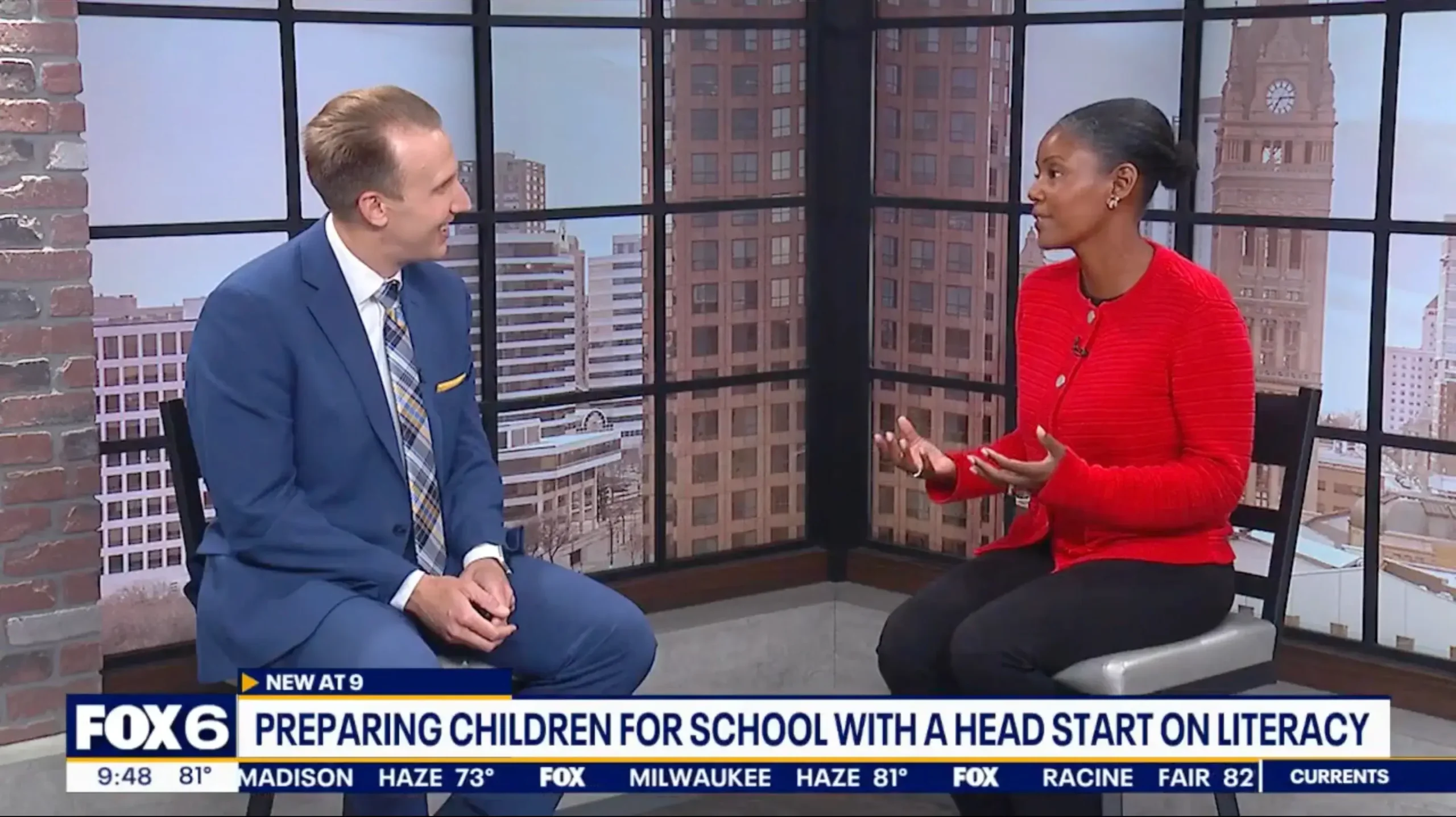
Here’s what happened when Fox 6’s Carl Deffenbaugh and I talked about turning lazy summer days into literacy goldmines.
Picture this: It’s July in Milwaukee. School’s been out for weeks, and parents are wondering if their kids’ brains are slowly turning to mush. Sound familiar?
That’s exactly what Carl Daffenbaugh (fellow Medill School of Journalism alum!) and I unpacked during my recent Fox 6 Milwaukee morning show appearance.
Plot twist: When summer breaks the rigid routines of the school year, all learning isn’t lost. The change of season creates space for the kind of natural, joyful learning that actually sticks.
Your Minivan Is a Mobile Classroom for Summer Learning
Summer is a goldmine for language and literacy learning—precisely because routines are disrupted. Those long road trips, impromptu museum visits, and endless grocery runs? They’re packed with learning potential.
Think about it: Words like acceleration, corkscrew, and harness may show up in class someday—but at an amusement park, staring up at the foreboding climbs and precipitous drops? That’s vocabulary in action: vivid, memorable, meaningful.
Unlike the classroom, summer hands you organic teaching moments at every turn. The farmer’s market becomes a lesson in colors, textures, and seasons. The drive-through line becomes an opportunity to read menus together. All you have to do is notice—and talk.
The Great Baby Talk Debate (Spoiler: You Can Do Both)
During the segment, I urged viewers to treat their babies’ coos and babbles as real conversation, and to respond. Yes, even when it sounds like gibberish. These early “chats” help build the brain connections that support language and reading later on.
Carl brought up the question every parent wonders about: Is baby talk bad for kids?
My response: Go ahead and use silly voices sometimes—kids love them. But pair it with real words for real things. Say “Look at the enormous truck!” instead of “Wook at da big-big twuck!”
You are your child’s primary vocabulary builder. If you don’t introduce rich, meaningful words, who will?
The Research That Will Blow Your Mind
“There are correlations between the language skills of toddlers and their IQ and vocabulary as middle schoolers,” I shared with Carl and the Fox 6 audience.
Think about that. The words you and your two-year-old exchange today predict their language and literacy performance years down the road.
The action step? Continue having those back-and-forth conversations. Ask your little ones lots of questions and give them opportunities to think and use the vocabulary they’ve learned.
Those everyday chats about cloud shapes, grocery lists, and bedtime stories are building your child’s academic future, one conversation at a time.
Permission to Keep Summer Learning Simple
Here’s your official permission slip: Effective literacy support doesn’t require turning your home into a school this summer.
“Even if your child is two or three, you can start pointing out letters. This is an S—see how it curves? These little things that don’t feel like lessons are really impactful over time,” I explained to viewers.
The magic happens in the moments that don’t feel like teaching at all. Weave the summer learning lessons into everyday life—it’s easier for you and more effective for them.
The Bottom Line
Want to dive deeper? All of this—and so much more—is in Reading for Our Lives: The Urgency of Early Literacy and the Action Plan To Help Your Child. Because raising readers shouldn’t be complicated, but it should be intentional.

