
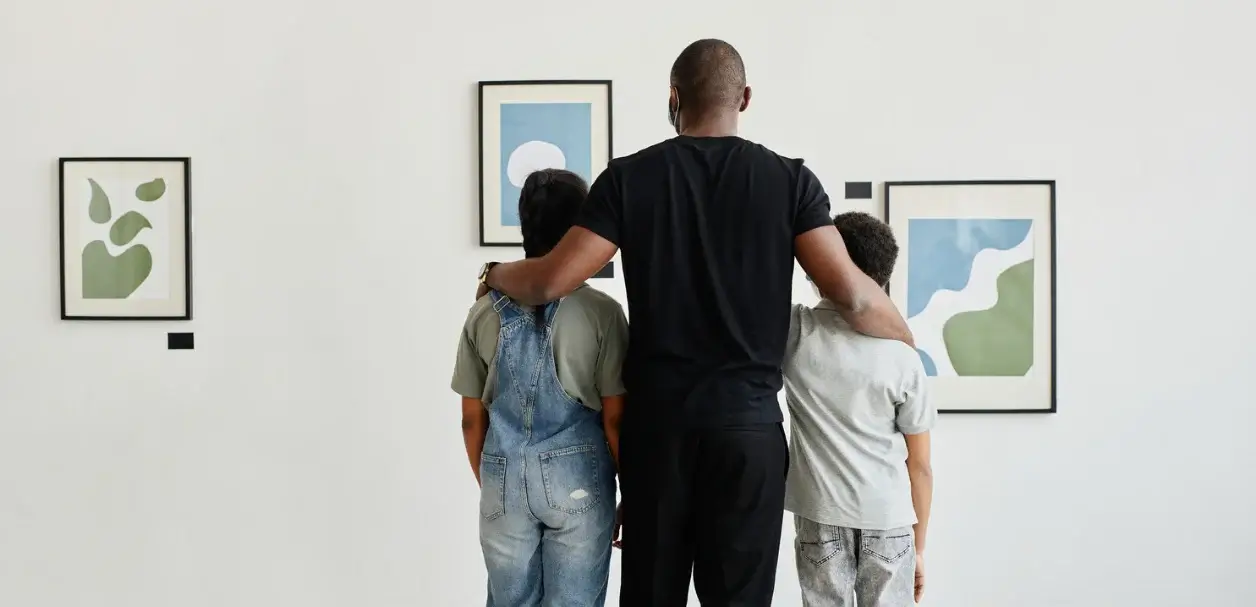
The first time I took all three of my kids to an art museum, the experience almost devolved into a standoff of nagging about walking feet and indoor voices (me) vs defiant wandering (them), before we called a truce and salvaged our day.
I’d had fond but vague memories of that museum from my own childhood and had gone into the outing with unrealistic expectations. The experience reminded me to be flexible, keep outings fun, and respond to my kids.
Exposing kids to diverse experiences, from nature to plays to historic sites to author talks to museums and more, is one of the joys of parenting. As I’ve learned, it can also be frustrating if we don’t take measures to make it enjoyable for everyone. With that in mind, this post explores practical tips for taking kids to “grownup” museums with less fussing and more fun.
Why Take Kids to Museums
First, though, it’s worth thinking about why we want to take our kids to see museum exhibits on art, history, science, language, and other subjects. Besides exposing our kids to things we care about, outings like this—and the other kinds of diverse experiences mentioned above—support kids’ development and set them up for success in reading and school.
That’s because these experiences build rich vocabulary and background knowledge that can support kids as they learn to read, and then as they tackle ever-more complex reading material later on. The more words and topics they’ve encountered in real life, the more they’ll be prepared to comprehend when they come across them in books, as extensive research has shown.
There are plenty of rich experiences out there created with kids in mind, like children’s museums, petting zoos, library story times, and a plethora of kid-oriented events. It’s worth exploring as many of these as you can with little ones—but there’s also real value in taking kids to places that don’t expressly cater to children, including those that hold special interest for you.
Here are a few tips to make those adventures as successful as possible.
Go to the Museum for Free
Taking children to “regular” museums is great for exposing them to something new and stretching them. Just keep in mind that stretching works best when it’s done slowly, a little at a time.
For that reason, it’s good to be prepared for a shorter visit than you might make on your own. Going on a free community day or getting free passes from a library—many museums offer both!—can ease the guilt of leaving early.
A full-price visit may be well worth it, too, especially if you have a tight schedule or want to avoid crowds, but remind yourself that the goal is to leave the museum on a positive enough note that you’re both interested in repeating the experience. That may mean keeping it short and sweet.
Tease the Topic
Your kids will enjoy the museum a lot more if they understand something about what they’re looking at, so it’s worth introducing them to the topic of the exhibit ahead of time.
I once took my kids to see ancient Egyptian artifacts in a museum when none of them really knew anything about the relevant history—to mixed results. I went to a similar exhibit another time after one of them had just studied ancient Egypt in school, and it hit home a lot better.
Simple lack of understanding is an overlooked cause of many behavior and attention problems, from kids struggling with reading comprehension in classrooms to those running amok on field trips, as happened with my daughter’s fourth-grade class. A young docent talked to the students about many topics—all utterly unfamiliar to them—in eloquent language far beyond their grade level. Predictably, he had trouble keeping their attention.
You can avoid this issue by introducing the topic ahead of time and keeping your explanations understandable. No need to go all-in on teaching beforehand, but sharing some picture books or a kid-friendly documentary about the exhibit’s subject can set the stage for a better visit. If you keep it on their level and model enthusiasm, they may get excited, too.
Keep it Fun and Go at Their Pace
Again, you may not be able to read every plaque or see every display piece when you go to a museum with kids. Prepare yourself to go at their speed, take breaks as needed, and hit the road when it’s time. (When my usually mature 11-year-old took a running start before leaping up and rebounding off the wall of the British Museum, I knew it was time for us to leave!)
Even better, add some playful elements or turn part of your visit into a game. When I was small, my mother let me sit down on a bench in an art museum gallery and create my own art, for example. She also welcomed my opinions and wasn’t scandalized if I didn’t like some of what I looked at—in fact, discussing our thoughts about what we saw was part of the fun.
I love this scavenger hunt idea that the Guardian newspaper published from a reader named Nadia, too: Take the kids to the museum shop first and let each choose a few postcards of artworks. Then wander the museum, trying to find the pieces on each child’s cards. Finally, hit the cafe to vote on your favorite piece.
And, speaking of cafes, that brings me to my last point…
Feed Them (and Yourself)
Build in a break to feed your bodies as well as your brains, and make it part of the enjoyment. Refreshments can keep your crew going and complete the outing with some simpler pleasures on top of the intellectual ones.
Museum cafes are often charming, fairly relaxed places to get a snack for the kids and a much-needed pick-me-up for yourself, too—but there’s also usually a courtyard or other outdoor area where you can have a picnic from home. It also gives kids room to let off steam after being on their best behavior inside.
Plan ahead and bring some fun snacks or check that the cafe will be open, then take the break whenever you need it.
The Bottom Line
You don’t need a perfect museum day. Just a few good moments can be enough to introduce the concept to your little ones and set the stage for future visits.
Even if your trip doesn’t go as well as you hoped, try to end on a high note, whether it’s finding one fun exhibit, hitting the museum gift shop, or just laughing together over whatever went wrong (or whatever they didn’t like).
That may be all your child actually remembers later—plus the idea that going to museums is “something they do.” And that could be the biggest success of all.
Get Reading for Our Lives
Learn how to foster your child’s pre-reading and reading skills easily, affordably, and playfully in the time you’re already spending together.
Get Reading for Our Lives