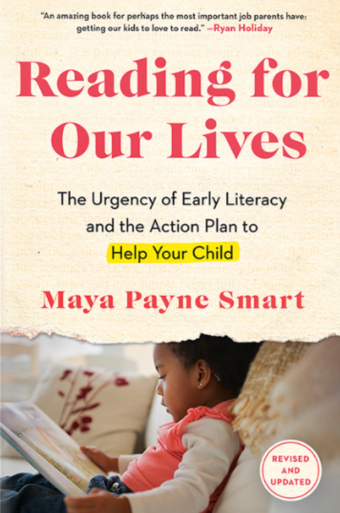

At my book signings, someone almost always comments on my handwriting as I autograph copies of Reading for Our Lives. It catches me off guard, until I remember that the parents in my line keep getting younger. For many of them, cursive belongs to grandparents and historical documents, not to their world—let alone that of their kids.
I’ve been thinking about that lately, because of my own teenager. My husband is a stickler about thank-you notes, and watching my 14-year-old write one recently, I noticed her handwriting was really just printing with the occasional flourish. Somewhere between COVID closures and a cross-country move, formal cursive instruction never stuck. I don’t want her to grow up incapable of capturing handwritten notes at the speed of a lecture or corresponding with people in a nice elegant script that matches the occasion.
Old school? Yes. And, still important. I do my deepest thinking in cursive and my most practical notetaking thanks to some shorthand learned in journalism school, so I plan to help her build her skills over summer.
Nobody assigned me to catch that lack. I caught it because I’m the one who’s there, seeing her day in and day out, noticing what she does with ease and what could use some time, attention, or support. That’s what it means to monitor your child’s reading and learning: quietly tracking where they are, year after year. It’s the most underrated thing a parent does.
You’re the Connective Tissue
No one is positioned in your child’s life the way you are.
A classroom teacher may have your child for a span of months–along with a couple dozen others. A school may have them for a span of years—though staff may rotate during that time. You’re with them through the full arc of their education, and you see them everywhere: playing, eating, melting down, lighting up, going quiet in a new room. You are the connective tissue around all of their other experiences, the steady perspective, the enduring advocate.
That presence is a superpower. It gives you insight no specialist can replicate—insight that’s genuinely useful to the teachers, doctors, and librarians in your child’s life. We don’t hand off responsibility when our kids start school. We hold onto it, because no one cares more than we do, no one is there for the long haul in the same way, and no one is better placed to notice when something is off, or when something is wonderful.
That’s why it’s so important for you, as a parent, to monitor your child’s progress.
Sometimes Monitoring Means Catching the Good Stuff
When I advise parents to keep an eye on their kids’ progress, I sometimes worry that it sounds clinical—like you’re hunting for delays and issues. So let me tell you about my dad.
I’m 45 years old, and I still remember the day we got my fourth-grade proficiency test scores from the state of Ohio. My dad looked at them, smiled ear to ear, and announced in a silly voice, “The girl’s a genius.” That’s the whole memory. And honestly, his saying those words cemented a confidence in me that I carry to this day, more than the scores themselves ever could have.
Let’s look at what he actually did. He read the state assessment data—something I’m always telling parents to review—and instead of filing it away, he turned it into a celebration. That’s monitoring at its best. Everybody smiles and claps when a baby takes a first step. We should be just as quick to mark the reading milestones, for our children and for ourselves.
I do this for my daughter now, though my style has shifted. My husband and I lean toward praising her process—what goes into desired results. We try to note when she’s putting in work toward a goal and to ask “what would a growth mindset say?” when she feels like she’s come up short. Resisting the urge to label the outcome is deliberate, shaped by what research now tells us about the value of praising effort, process, strategy, or inputs, versus fixed traits or results. But the core—noticing and celebrating wins—remains.
So, as we tackle cursive together this summer, we’ll have fun with it, and we’ll celebrate the payoff: a signature that’s actually hers, faster notes, a new way of working in class.
Speaking of signatures, we shared a good laugh over the President’s Education Awards Program certificates that came home at the end of the school year. The president’s signature on them looks like a little mountain range, all sharp up-and-down strokes that don’t resemble letters much at all. Kids at the school actually Googled it to check whether it was real. Signatures sometimes speak volumes.
When Something Nags at You, Act on It
The flip side of celebration is: When a worry surfaces, honor that, too.
Monitoring means trusting the small, nagging questions that come up about your child’s language and literacy, and then doing something about them. Not hand-wringing. Not waiting to see. But taking action to get your questions answered and find support.
I’ve written before about a mom who was told again and again to “just wait” while her son struggled to read, and who refused—and who, in doing so, changed everything for him for the better. Every day, kids fall through the cracks. The goal isn’t to panic when your child hits a bump in the road. It’s to feel a quiet urgency about being proactive, because odds are no one else is going to rescue your child if there’s a problem.
You Already Know More than you Think
If this feels like one more thing on an impossible list, start small. There’s a simple structure I use in Reading for Our Lives, and it comes down to three items.
- Guidelines: Pick one resource that tells you what abilities are typical or hoped for at your child’s age or grade. You can take a look at the CDC’s developmental milestones, your state’s early learning guidelines, or its English language arts standards. Pick just one and get familiar with it.
- Personal observations: Keep a running note, in a pocket notebook or on your phone, of what you see going on with your child’s reading and writing development. The great stuff, the funny stuff, the things that puzzle or worry you. Add the date.
- Specialists: List the people who can help: a teacher, a family-engagement coordinator, a pediatrician, a librarian. Then take advantage of the openings to reach them, like an annual well-child visit, a parent-teacher conference, or a library event for parents. When you do, don’t be shy about asking questions. Often, they chose their field because they want to help.
Seeing those three items written out does something. It reminds you that you’re not alone, and that you already hold a deep, expert knowledge of your own child that’s worth sharing with others who can support them.
This is the part of raising a reader that doesn’t get a milestone chart of its own. But it’s the part only you can do. If not you, then who?
You’ll find more information about monitoring your child’s development and knowing when to seek help in my book, Reading for Our Lives.
Get Reading for Our Lives
Learn how to foster your child’s pre-reading and reading skills easily, affordably, and playfully in the time you’re already spending together.
Get Reading for Our Lives