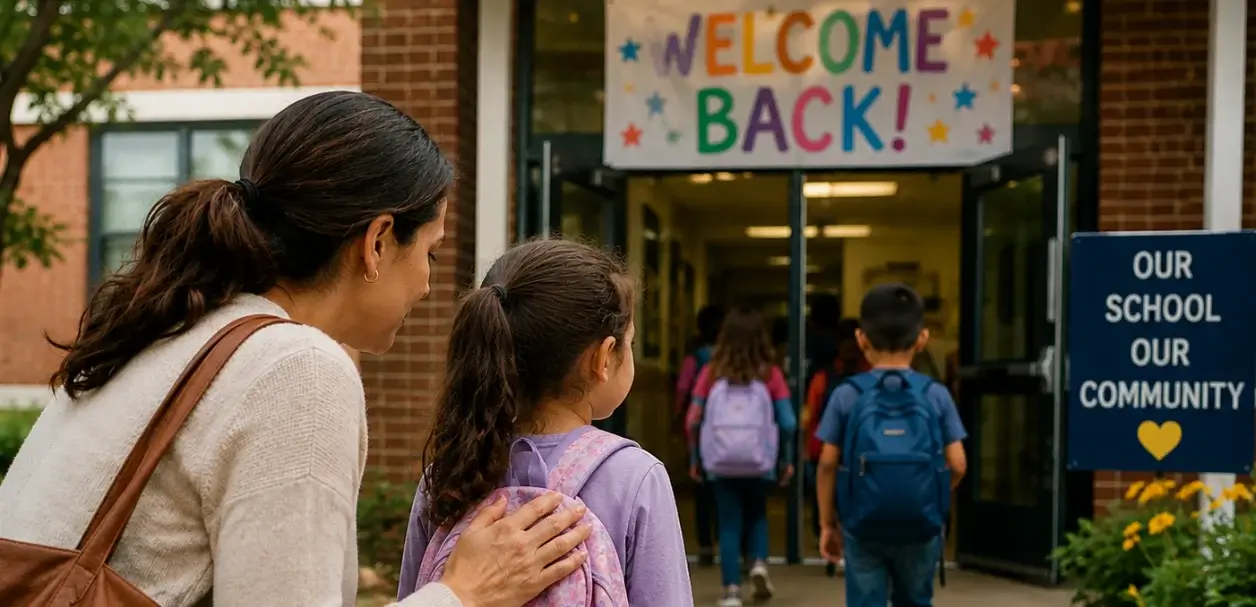
As a parent, you probably want to know your child feels happy, safe, and cared for at school or daycare—and that they’re getting a solid educational foundation to launch their future.
Strong reading and writing skills are central to kids’ school success and eventual prospects in all sorts of arenas. But how can you tell if your child’s school is setting them up for success in reading and writing?
You don’t need a degree in education to recognize high-quality literacy instruction. Once you know what to look for, a few observations and key questions can tell you a lot about whether a program is building the language and literacy skills your child needs.
And if something feels off, you don’t have to quietly accept it. Parents can be powerful advocates for better literacy practices—not by battling teachers, but by partnering with them.
Here’s what to look for as your child grows, from daycare through elementary school.
Start Early: What to Look for in Daycare and Preschool
Long before children learn to read, they’re building the language foundation that reading depends on. That means the early years matter enormously.
A strong daycare or preschool program should feel language-rich and playful. You should hear adults talking with children—not just directing them. Teachers should ask open-ended questions, introduce new vocabulary naturally, and encourage lots of back-and-forth conversation (aka encourage your child to talk and then really listen to them).
Pretend play, storytelling, songs, nursery rhymes, and read-alouds all help children develop the oral language skills that later support reading comprehension and writing, too.
- Look for the elements I discuss in this post: How to Choose a Preschool or Childcare for Your Child
- And check out this post for more related tips: Things Every Daycare Should Be Doing to Protect Kids’ Brains
Preschool is also an important time for children to begin learning the ABCs, both the names of letters and the sounds they represent. Research shows that kids who enter kindergarten knowing more letters have an easier time learning to read and advancing later on.
If you’re evaluating a daycare or preschool, pay attention to whether language, letters, and literacy are woven throughout the day in joyful, meaningful ways.
Early Elementary: Look Closely at Reading Instruction
Once kids start elementary school and begin formal reading instruction, the teaching approach matters tremendously. And with most kids in the U.S. not reading at grade level, the stakes are high. So how can you evaluate the reading instruction at your child’s school?
One of the biggest things parents can learn to recognize is the difference between structured literacy instruction and approaches that expect children to “pick up” reading naturally.
Research consistently shows that most children benefit from direct, sequential instruction in how written language works. That means teachers clearly explain the relationships between letters and sounds, guide students through practice, and build skills in a logical sequence.
You should hear administrators or teachers talking about phonics or the “science of reading.”
- Find out more about what to look for here: Why Phonics Instruction Matters—and How to Know if Your Child is Getting It
By contrast, some classrooms still rely heavily on approaches that encourage kids to guess words from pictures and context clues. While those strategies may look smooth on the surface, they can leave many children without the skills they need.
Ask About Decodable Books
One simple question can reveal a lot about a school’s reading philosophy: “Do students use decodable books as part of their early reading instruction?”
Decodable books are early reading texts that are carefully designed so children can actually sound out—aka “decode”—the words using the phonics patterns they’ve learned.
For example, if a child has learned a few consonants and short vowel A, an appropriate decodable text might include sentences like: “Matt sat.” However uninspiring from a literary perspective, the text gives the child repeated chances to practice applying what they’ve learned and to experience success reading independently. It also builds habits of paying attention to each letter and sound within words, which will serve them well as their letter-sound knowledge grows.
Relying on pictures or memorization of whole words as the primary way to identify words just doesn’t scale. If a school depends mostly on predictable books and sight-word lists, children may appear to be reading but not actually develop the letter-sound decoding skills needed to become skilled, fluent readers.
Predictable books, rich read‑alouds, and other “authentic” texts still have an important place in learning. They can help build oral language, vocabulary, background knowledge, and comprehension. But they should complement, not replace, opportunities for students to bridge into independent reading with decodable texts.
- I spoke with Sara Cotner of Montessori for All about the importance of decodable readers and explicit phonics instruction: A Montessori Expert Shares Science-Based Tips for How to Raise a Reader
As Kids Grow, Pay Attention to Writing and Spelling
Spelling often gets short shrift from schools and parents who think it matters less than reading and writing, but the fact is that the three are intimately connected.
What’s more, good spelling makes other people, like teachers and future hiring managers, judge your child more favorably. Knowing the nuances between similarly spelled words is also key for your child to make sense of more complicated texts as they get older.
Unfortunately, many schools and classrooms skip over spelling instruction altogether—or limit it to weekly lists of random words to memorize.
A stronger approach teaches spelling patterns, word structure, and the logic behind spelling. As your child gets older, it’s worth asking their teacher or school if they teach spelling, and what it looks like if they do.
- Use these questions to evaluate the quality of spelling instruction: 9 Questions to Ask Your Child’s Teacher About Spelling Instruction
How to Advocate for Better Literacy Instruction
If you discover gaps in your child’s language and literacy formation at their school or care center, it’s time to speak up. It can feel uncomfortable to be the “squeaky wheel,” but remember that advocacy does not have to be adversarial.
Most teachers care deeply about helping children succeed. Many are working within systems or curricula they didn’t personally choose. Approaching conversations with curiosity and collaboration often opens more doors than confrontation.
- You might say: “I’ve been learning more about evidence-based reading instruction, and I’d love to better understand how reading skills are being taught in the classroom.”
- Or: “My child seems to struggle with decoding unfamiliar words. Are there ways we can support more explicit phonics practice together?”
The goal isn’t to “win” an argument. It’s to build a shared understanding of what helps children become confident readers and writers, and support teachers to deliver it.
Parents don’t need to become literacy experts overnight. But learning a few key concepts and asking thoughtful questions can make an enormous difference in a child’s educational experience.
When families and educators work together around evidence-based literacy practices, kids are far more likely to develop the strong reading and writing skills that support learning for years to come.
Get Reading for Our Lives
Learn how to foster your child’s pre-reading and reading skills easily, affordably, and playfully in the time you’re already spending together.
Get Reading for Our Lives