If you and your little one are counting down the days and minutes until Super Sunday kickoff, why not pass the time with some fun football reading? Just use this specially curated list to put together an awesome Super Bowl-themed story time.

You’ll find a selection of picture books to read for the Super Bowl that channel game day energy as they celebrate teamwork, courage, and the thrill of chasing dreams. You’ll discover winning reads for both little football fans and newcomers to the game. The titles range from explanations of the sport and the Super Bowl tradition to true tales of dogged determination and playful fictional adventures. 

So grab a cozy spot, huddle up, and enjoy some super reads that will keep the fun going long after the game ends.

Patrick Mahomes

Written by Maria Isabel Sánchez Vegara, Illustrated by Guilherme Karsten

This picture book tells the story of one football’s current brightest stars as part of the Little People, Big Dreams series. From backyard games to Super Bowl victories, Patrick Mahomes’s story highlights determination, creativity, and the value of being a team player. The lively illustrations capture the energy of the sport, while the simple text makes his journey relatable to kids who dream big—on the field or off it.

Purchase

Pigskins to Paintbrushes

Written and illustrated by Don Tate

Celebrated author and illustrator Don Tate’s latest picture-book biography, Pigskins to Paintbrushes: The Story of Football-Playing Artist Ernie Barnes, introduces young readers to the idea that sports stars can have multiple dimensions to their personalities. As a boy, Ernie Barnes didn’t care about sports like the other neighborhood boys, and he found comfort in art instead. He later went on to become a football star after reluctantly joining his school’s team, but he never gave up his passion for art and became known as an artist and an athlete.

Purchase

My First Book of Football

Sports Illustrated Kids

This entry-level football book helps kids understand how the game works—from kickoffs and touchdowns to teamwork and cheering crowds. Using photographs, bold graphics, and easy-to-follow explanations, it breaks down key terms and plays in a way that feels exciting and fun. This title is ideal for older preschoolers through early elementary readers who want to learn more about the sport. It’s also available as a sturdy board book.

Purchase

Follow Chester

Written by Gloria Respress-Churchwell, Illustrated by Laura Freeman

Follow Chester: A College Football Team Fights Racism and Makes History is a powerful title that inspires kids to combat discrimination through the powerful story of Chester Pierce, a football player at Harvard University in 1947. When the team was scheduled to play the University of Virginia, Jim Crow rules forbid Chester from playing, but his team rallied around him. Chester became the first black college football player to play a game below the Mason-Dixon line—and went on to become a tenured professor at Harvard Medical School.

Purchase

Miss Mary Reporting

Written by Sue Macy, Illustrated by C.F. Payne

Miss Mary Reporting: The True Story of Sportswriter Mary Garber introduces kids to a legendary reporter and role model for breaking barriers in the sports world. From playing quarterback with the neighbor boys to attending football games with her dad, Mary Garber always loved sports, but the sports world didn’t seem to hold a place for her. When newspapers were low on reporters during World War II, she finally got a chance at her dream job: writing about sports. Inspired by Jackie Robinson’s courage on the baseball field, Garber went on to a 58-year career in sportswriting. Along the way, she carved a path for more women and brought more equality to sports journalism by covering black athletes.

Purchase

What Is the Super Bowl?

Written by Dina Anastasio, Illustrated by David Groff

This book gives kids a fun look at everything Super Bowl, explaining how the tradition began, why it’s such a huge deal, and what makes game day special—from the football action to halftime shows and unforgettable commercials. Author Dina Anastasio packs in plenty of interesting facts about famous players, record-breaking moments, and how teams earn their place in the championship. This title gives a more in-depth explanation of the ins and outs of the biggest game in football and is aimed at kids around 7 to 12—although younger megafans may also enjoy the deep-dive.

Purchase

Dino-Football

Written by Lisa Wheeler, Illustrated by Barry Gott

How could you make football even more fun (at least for little listeners)? By adding dinosaurs!

In Dino-Football, dinosaurs take the field for the annual Mega Bowl. The Greenblade Snackers and the Redscales battle it out with big plays, silly fumbles, and even a dino halftime show. Lisa Wheeler’s playful rhymes make the story bounce along, while Barry Gott’s illustrations bring every dinosaur to life. Little ones will giggle at the dino fans in the stands and learn a few football words along the way. It’s a fun choice for kids new to football and seasoned fans alike.

Purchase

Unstoppable

Written by Art Coulson, Illustrated by Nick Hardcastle

Get ready to cheer for one of the most impressive athletes in history. Unstoppable: How Jim Thorpe and the Carlisle Indian School Football Team Defeated Army tells the true story of Thorpe, a Native American sports star who could do it all—playing football, basketball, baseball, and even winning Olympic gold for the United States! This exciting picture book focuses on a specific episode in Thorpe’s life: when he and his teammates from the Carlisle Indian School used skill, speed, and heart to beat the mighty Army team. With an inspiring message about teamwork, courage, and pride in your heritage, Unstoppable is a terrific read and a compelling reminder that determination can overcome obstacles.

Purchase

Big Dreams

Written by Alexandra Hoffman, Illustrated by Beatriz Mello

Gabby really wants to try out for the football team—but she hasn’t ever seen a girl play. With encouragement from her dad, she signs up anyway and discovers she can shine on the field in her own way. It’s a sweet tale celebrating a girl who follows her dream and challenges the idea that “only boys” belong in that game. Bright illustrations by Beatriz Mello bring Gabby’s try-out and game to life, giving children an opportunity to cheer for a character stepping into something new.

Purchase

The Football Girl

Written by Malajsha Mollett

This special title was written by a kid, making it super relatable and fun for other children to read, as well as an inspiring example to encourage other young writers. Malajsha Mollett, 13, authored this delightful game-day read. It tells the story of a girl who loves football and refuses to sit on the sidelines when others say she doesn’t belong on the team. Mollett’s story brings football excitement to the page, making readers cheer for every play. It’s a super book for the Super Bowl or anytime you want to share a story full of determination, friendship, and a child going after what they love.

Purchase

Got a kid who loves math and numbers? Or are you looking for a way to sneak a little math into your young child’s day without groans or worksheets? Picture books can be a solution to either equation. (Pun intended.) Through fun storytelling and vibrant illustrations, children can explore numbers, shapes, and problem-solving while getting lost in an adventure. 

The books on this list aren’t just fun stories—they’re specially selected picture books to make math fun for kids, reminding us that books teach so much more than literacy. As Reading Rainbow reminded us, “Take a look, it’s in a book!” When math topics are woven into smart plots or colorful characters, they present math as it is: something alive and exciting, not just pages of equations. Read on for a list of playful math picture books you can count on!

Counting and Number Sense

How Do Dinosaurs Count to Ten?

Written by Jane Yolen, illustrated by Mark Teague

Turn counting practice into a delightful prehistoric adventure. As silly dinosaurs go about their day—stacking blocks, playing with toys, and snuggling in for bedtime—young readers count along from 1 to 10. Each page connects numbers to everyday activities and familiar objects, making math feel natural. It’s a good reminder that number practice doesn’t always need flashcards or drills, just a little curiosity and imagination. Parents can build on the story by counting toys, snacks, or steps together at home, turning ordinary moments into joyful learning.

Purchase

10 Black Dots

Written and Illustrated by Donald Crews

Legendary author/illustrator Donald Crews shows us that counting and creativity can go hand in hand in this charming picture book. Across the pages, he transforms 10 simple black dots into wheels, suns, balloons, and so much more—using first one dot, then two, and so on up to 10. The minimalist illustrations and clean design let the numbers take center stage, proving that learning doesn’t have to be complicated to be powerful.

Purchase

Uno Dos Tres: One Two Three

Written by Pat Mora, illustrated by Barbara Lavallee

This bilingual picture book includes numbers and counting in both English and Spanish. It uses vivid illustrations and effortlessly rhythmic text to teach counting from 1 to 10, with each number connected to everyday items or scenarios. Best-selling author Pat Mora’s warm storytelling and Eleo Kaemmerer’s art create a culturally rich way for your little ones to learn their numbers and enjoy the rhythm of language.

Purchase

Anno’s Counting Book

Illustrated by Mitsumasa Anno

This book is truly lovely.
Anno’s Counting Book turns counting into a quiet adventure of discovery. It begins with an almost empty landscape, then slowly fills with life—one house, two trees, three children, and so on—until a bustling little town takes shape. Without a single word, kids get to spot new details, make connections, and count along as the seasons change. It’s part seek-and-find, part number story, and entirely enchanting. This classic counting book invites kids to look closely, count creatively, and see how numbers bring a whole world to life.

Purchase

A Million Fish… More or Less

Written by Patricia C. McKissack, illustrated by Dena Schutzer

Newberry and Coretta Scott King Award-winning author Patricia C. McKissack has made math and folktales a marvelous combination. When a boy named Hugh Thomas catches a “million fish,” he can’t wait to show them off—but along the way, his haul mysteriously shrinks, as curious creatures and tricky circumstances intervene. With its jolly exaggeration and rhythmic storytelling, this math picture book turns estimation, counting, and big numbers into pure fun. It’s a joyful blend of folklore and number sense, well-suited to kids who love a good story with a great twist.

Purchase

Pebbles and the Biggest Number

Written by Joey Benun, illustrated by Laura Watson

What’s the biggest number in the world? Curious Pebbles the butterfly sets off on a whirlwind adventure to find out. Traveling across deserts, oceans, and even outer space, Pebbles meets animals who share enormous numbers—from grains of sand on Earth to stars in the sky. This lovable story helps launch children into the universe of large numbers, counting, and real-world math concepts, helping them grasp ideas that can otherwise feel abstract. In my own classroom, I’ve seen students argue over whose turn it was with Pebbles and the Biggest Number (something I’d never seen over a math book before). Kids are thrilled by the chance to articulate and understand huge numbers with confidence.

Purchase

Addition and Subtraction

Anno’s Magic Seeds

Written and illustrated by Mitsumasa Anno

In Mitsumasa Anno’s well-earned second appearance on this list, Anno’s Magic Seeds introduces slightly older children to multiplication through addition in a magical story about growth and decision-making. When Jack, a poor man, receives two magical seeds from a wizard, he must choose: eat one to stay full for a year or plant both to grow more seeds. As the years pass, readers can watch how planting both seeds leads to an increasing harvest, illustrating early multiplication (and smart planning!) in a story format.

Purchase

12 Ways to Get to 11

Written by Eve Merriam, illustrated by Bernie Karlin

In 12 Ways to Get to 11, little readers explore 12 different paths to the same number, such as nine pinecones plus two acorns, or six spoons plus five bananas. With lively, detailed illustrations, this sweet book helps your budding mathematicians see that numbers can be flexible and creative, not just fixed answers on a worksheet. It includes addition and number decomposition in a way that feels like a game or scavenger hunt. An excellent choice for showing that there’s more than one way to solve a problem—and more than one way to get to 11!

Purchase

Geometry

Sir Cumference Series

Written by Cindy Neuschwander, illustrated by Wayne Geehan

This fun book series pairs knights and math, bringing geometry, measurement, and fractions to life through clever medieval adventures. Follow Sir Cumference, Lady Di of Ameter, and their son Radius as they solve puzzles and tackle challenges that sneak in important math lessons. Titles like Sir Cumference and the First Round Table and Sir Cumference and the Dragon of Pi introduce concepts such as circles, circumference (naturally), and the magic of pi, all wrapped in humorous storytelling. (Plus, later in the series you can learn about additional math topics like fractions or place value!)

Purchase

Now What? A Math Tale

Written by Robie H. Harris, illustrated by Chris Chatterton

Has your child ever tried to build the tallest tower or coolest fort by fitting together variously shaped blocks? In this book, Puppy faces a similar challenge: figuring out how to fit different shapes together to make a perfect bed. His trial-and-error adventures introduce children to geometry, spatial reasoning, and problem-solving—ideas they can relate to their own block-building experiences. Perky illustrations keep the story lively, while the narrative encourages kids to think critically about how shapes fit, stack, and balance. Well-suited for ages 4 and up, this book makes early geometry tangible and familiar, showing that math isn’t just numbers on a page. It’s something they can touch, explore, and play with every day.

Purchase

Mouse Shapes

Written and illustrated by Ellen Stoll Walsh

This book turns learning about shapes into a cheeky romp. A group of inventive mice use triangles, squares, circles, and rectangles to build houses, forts, and hideouts—until a curious cat shows up! Through brightly colored illustrations and straightforward text, kids get to see how shapes fit together in everyday objects and imaginative creations. The story makes geometry tangible and interesting, showing that learning shapes can be an adventure rather than a lesson.

Purchase

Measurement

Lia and Luis: Who Has More

Written by Ana Crespo, illustrated by Giovana Medeiros

This book is a quick, simple read that introduces young children to early math concepts in a unique way. The story follows Brazilian-American twins Lia and Luis as they compare snacks to figure out who has more—using counting, volume, and weight. Wonderfully relatable to anyone who has a sibling. What’s more, kids are introduced to Brazilian Portuguese words and traditional snacks like tapioca biscuits and chicken croquettes. It’s a great way for parents to spark curiosity, math talk, and cultural appreciation, all in just a few pages. A delightful and educational read-aloud!

Purchase

Look, Grandma! Ni, Elisi!

Written by Art Coulson, illustrated by Madelyn Goodnight

This book is an engaging read that introduces little ones to ideas like size, volume, and spatial reasoning through a culturally rich story. Ideal for ages 3 to 6, the book follows Bo, a Cherokee boy, as he searches for the perfect container to display his marbles at a local festival. In addition to exploring volume, Look, Grandma! Ni, Elisi! introduces Cherokee language and culture to children from other backgrounds and gives Cherokee children a chance to see and celebrate kids like themselves in a book.

Purchase

How Much Does a Ladybug Weigh?

Written and illustrated by Alison Limentani

Ever wondered how much a ladybug weighs? In this brilliant book, children compare animals of different sizes—for example, 10 ants weigh as much as one ladybug, nine ladybugs weigh as much as one grasshopper. Along the way, they slowly build an understanding of weight, comparison, and early multiplication. Giving kids real-world examples helps them make sense of weight and size comparisons that might otherwise feel too abstract. Families can discuss, guess, and imagine together, connecting numbers to creatures they recognize.

Purchase

How Big Is Big? How Far Is Far? All Around Me

Illustrated by Jun Cen

This delightful introduction to measurement and scale invites children to explore the world by comparing it to themselves. Through intriguing questions and imaginative visuals, kids discover just how tall, wide, fast, or heavy various animals and objects are—using recognizable references like their own thumb or footsteps. Whether it’s contextualizing the length of a whale or the speed of a snowflake, the book encourages curiosity and wonder about the world around us. Your kiddos will love seeing themselves reflected in the learning process, making complex ideas feel easy and approachable. It’s a joyful, thought-provoking read that turns measurement into an adventure.

Purchase

Multiple Math Skills

Math Curse

Written by Jon Scieszka, illustrated by Lane Smith

When a student wakes up to realize that everything can be seen as a math problem, ordinary moments—from counting cereal boxes to measuring the distance to school—suddenly become challenges to solve. The clever text and quirky illustrations make concepts like estimation, measurement, probability, and problem-solving entertaining and approachable. Math Curse is a great pick for kids 7 and up who are ready to laugh, think creatively, and see the world through an unusual, mathematical lens.

Purchase

Bedtime Math Series

Written by Laura Overdeck, illustrated by Jim Paillot

The books in this series turn the nightly bedtime routine into a cozy, educational ritual. Each volume pairs short, playful stories or scenarios with math problems designed for kids to solve in a relaxed, snuggly setting. From counting and addition to puzzles involving logic and shapes, the series offers challenges for a range of ages and abilities. By weaving math into bedtime, Overdeck makes learning feel like a natural, comforting part of winding down, giving families a chance to explore numbers together without pressure at a time many already spend together.

Purchase

Who Eats First?

Written by Ae-hae Yoon, illustrated by Hae-won Yang

In this adorable book, a group of animal friends discovers a ripe peach and each argues they should take the first bite. Each of the larger animals think they deserve to go first, but the tiny caterpillar suggests the best solution of all. Through this story, kids are introduced to measurement, comparison, classification, and logical reasoning, all while following the antics of interesting characters. The book encourages kids to think about how different attributes can be measured and compared, making abstract math ideas tangible.

Purchase

Grandparents’ Day may be in September, but a new crop of picture books is here to help us celebrate grandmas and grandpas and nanas and paw-paws year-round. That’s only fitting, because there are more grandparents today than ever before, according to The Census Bureau.

And the special ways they love, teach and relate to their children’s children is proven fodder for vivid, powerful storytelling. Look no further than these three titles I discovered at the Texas Book Festival. May they remind us of our elders’ wisdom, wit and care, as well as the role we can play in fostering space for those irreplaceable bonds to bloom.

Grandma’s Purse

by Vanessa Brantley-Newton

Dedicated to the author’s foremothers, Gullah Geechee people from the sea islands of South Carolina “who carried history in their pocketbooks,” this story mines the endless depths of a grandmother’s purse to reveal layer upon layer of whimsy and joy. “This coin purse holds my coins, of course, but it also holds memories,” Grandma says of one of its many treasures. “Your grandfather brought it back from Japan for me. So when I do something small like put away change, I do something big and think of him, too.” The curious little girl relishes every discovery, from a compact mirror to lipstick, perfume and earrings. Ultimately, she finds a gift for herself–a little purse just like Grandma’s.

Purchase

All Around Us

by Xelena Gonzalez, illustrated by Adrian M. Garcia

Created by childhood friends who grew up to become a journalist and artist, respectively, this vividly illustrated picture book evokes the beauty and mystery of everyday life. It features a young girl and her grandfather exploring their San Antonio neighborhood and discussing the interconnectedness of it all. Life is not a line, the story suggests, but a series of circles connecting the seen and unseen, the rainbow and the earth, the stems and the seeds, the living and the ancestors. The vibrant strokes and saturated color of the digitally created images within this Pura Belpré Illustrator Honor Book help children see themselves as part of the greater cycle of life.

Purchase

Drawn Together

by Minh Le, illustrated by Dan Santat

This stunner features dueling illustration styles in a moving exploration of a grandfather and a grandson’s struggle to bridge linguistic, cultural and generational divides. When mom drops the boy off at his grandfather’s house, they greet one another with a bow before settling into uncomfortable silence. It’s only when the boy takes out his markers and starts drawing that a spark of connection emerges. Grandpa draws too. His elegant pen and ink sketches of elaborate wizards and dragons stand alongside the boy’s more colorful, cartoonish strokes, together building “a new world that even words can’t describe.” At the end of the story, the pair remains speechless, only happily so, having created new art and forged a new relationship.

Purchase

Authors or illustrators associated with each of these books took part in the Texas Book Festival’s Reading Rock Stars program. This hands-on program sends nationally recognized authors into Title I schools in Texas to deliver dynamic presentations and give kids autographed books to take home. Want to support the program or bring it to your school? Click here to learn more. 
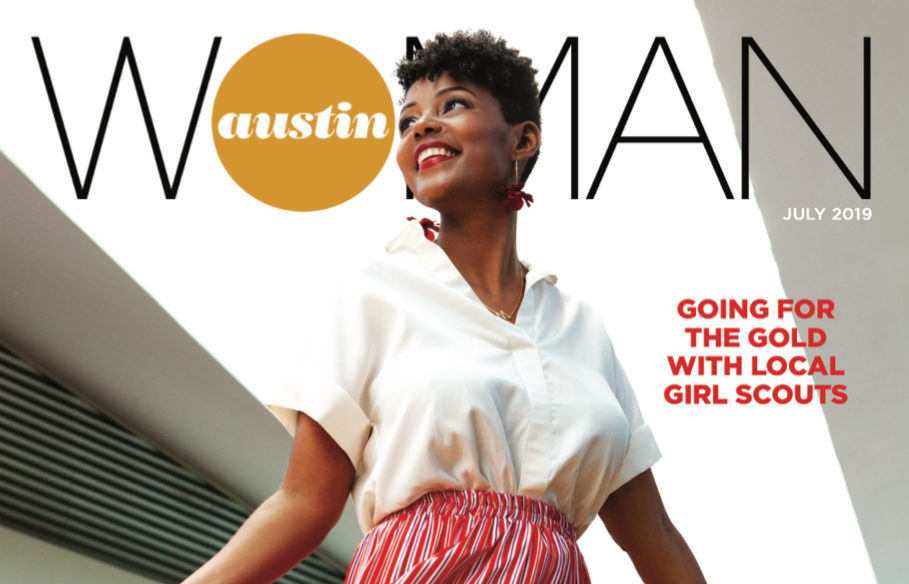
Thanks to Austin Woman for featuring me on the cover and highlighting the great work of the Texas Book Festival, Austin Public Library Friends Foundation, and I Live Here I Give Here.  It’s an honor to work within such a vibrant nonprofit community, fighting for more equitable distribution of our region’s vast resources.

Continue reading “Austin Woman: Maya Smart is Tackling Inequality One Book at a Time”

Thanks to Austin Woman for featuring me on the cover and highlighting the great work of the Texas Book Festival, Austin Public Library Friends Foundation, and I Live Here I Give Here.  It’s an honor to work within such a vibrant nonprofit community, fighting for more equitable distribution of our region’s vast resources.

Continue reading “Austin Woman: Maya Smart is Tackling Inequality One Book at a Time”

Many picture books aim to spur conversation around the quirks of English spelling, but Beth Anderson’s An Inconvenient Alphabet is a class above. While alphabet books like the popular P Is for Pterodactyl highlight unconventional spellings without illuminating the why’s behind them, An Inconvenient Alphabet goes much deeper. It brings to life some of the history and power dynamics responsible for English spelling—in ways that intrigue adults and children alike.

The book explores the true story of Ben Franklin and Noah Webster’s shared belief that English has letters with too many sounds (think: the various g sounds in goat, giraffe, and laugh), sounds with too many letters (the k sound in chorus, kite, cat, and quiet), and some letters that just aren’t needed at all (the silent letters in lamb, walk, knock, give). The bright, energetic marriage of text and illustration powerfully presents their efforts to revamp spelling in the service of American unity, identity, and clear communication.

Letters themselves, the 26 we know plus others Franklin created that never took off, are important characters in the book. Designed to represent the sounds aw, uh, edh, ing, ish and eth, Franklin’s new letters are depicted as 3D models carried around in a sack and handed out for examination. When I read the book with my daughter, she anticipated objections to the new letters—they look funny, would be tough to learn, and would make old books harder to read.

Illustrated with color, movement, and flair, the lively letters heighten the smart, inventive book’s explanatory power. Kids can see the oddity of the proposed letters, as well as the resistance in the faces of townspeople when Franklin shares them.

When Franklin’s introduction of new letters flops, the book moves on to Webster—the founder of the famous dictionary. It recounts his attempts (and mostly failures) to make English spelling more phonetic by advocating for using existing letters differently. Namely, he pushed for getting rid of silent letters (thum vs. thumb), plus using one vowel for short sounds (hed vs. head) and two for long ones (seet vs. seat). We read about how a few of his changes were adopted in fits and starts, and others rejected wholesale.

“Next time you sound out a word, think of Ben and Noah,” the book concludes. “THAY WUD BEE PLEEZ’D BEECUZ THAT IZ EGZAKTELEE WUT THAY WONTED!”

Informative and funny, An Inconvenient Alphabet shows how English spelling represents much more than letter-sound correspondences. Letter sequences, it reveals, embody choices that people and publishers have made, based on their own accents, understanding, and ideas about the value of tradition.

And people’s resistance to purely phonetic spelling has something to teach also: that history and meaning matter—and old (spelling) habits die hard.

Do you think English spelling should be made more phonetic? If so, why? And whose pronunciation would you use as the model, given the range of English pronunciations around the world?

Book Review: An Inconvenient Alphabet

Sources and Further Reading

Treiman, Rebecca, “Teaching and Learning Spelling,” Child Development Perspectives 12, 4 (2018): 235-239.

Treiman, Rebecca, “Statistical Learning and Spelling,” Language, Speech, and Hearing Services in Schools 49 (2018): 644-652.

Sliter, L., “Cough, Cough: Here Are 10 Different Ways To Say ‘ough’,” Dictionary.com Everything After Z, accessed February 7, 2019, https://www.dictionary.com/e/s/ough/.

Treiman, Rebecca, and Brett Kessler, Kelly Boland, Hayley Clocksin, and Zhengdao Chen, “Statistical Learning and Spelling: Older Prephonological Spellers Produce More Wordlike Spellings Than Younger Prephonological Spellers,” Child Development, 89, 4 (August 2018): e431-e443.

Doyle, A., J. Zhang, and C. Mattatall, “Spelling Instruction in the Primary Grades: Teachers’ Beliefs, Practices, and Concerns,” Reading Horizons 54 (2015): 1–34.

Fresch, M. J., “A National Survey of Spelling Instruction: Investigating Teachers’ Beliefs and Practice,” J. Lit. Res. 35 (2003): 819–848.

Jones, A. C. et al, “Beyond the Rainbow: Retrieval Practice Leads to Better Spelling than does Rainbow Writing,” Educ. Psychol. Rev. 28 (2016): 385–400.
In English, there are 26 letters, 44 sounds, and 250 or more different ways to spell those sounds. That means phonetic spelling will only get kids so far. Yet how many times have parents uttered “sound it out” to a child asking how to spell a word?

Kids’ responses to this refrain are often as wrong as they are reasonable. Think: spelling does with duz. Silent letters, single letters representing multiple sounds, and a slew of sounds with the same pronunciation, but vastly different spellings, all complicate English. Not to mention letter combinations like -ough, which is pronounced ten different ways. Yes, ten. (Rough, plough, through, slough, though, cough, hiccough, thought, thorough, lough.)

Don’t get me wrong: knowing how sounds typically correspond to letters is crucial for approximating spelling. But when there are multiple phonetically plausible options, spellers need more information to choose the correct one. There are three main ways they tend to get this information: exposure, memorization, and instruction.

Let’s take a look at each to gain insights that can help us parents facilitate better spelling sooner—and bolster reading speed and comprehension to boot.

Exposure. Kids learn a great deal about spelling without being explicitly taught, and this learning begins as soon as they pay attention to print. Their environments—the books, signs, and other text surrounding them—provide the raw material for subconscious learning. Whenever kids lock in on the letters in books, on signs, on toys, and elsewhere, they begin soaking up and analyzing simple visual characteristics of written language.

Kids instinctively apply this knowledge of letter combination probabilities to even their earliest spelling attempts. Preschool-aged kids demonstrate unconscious knowledge of visual patterns in spelling, long before learning that letters represent speech sounds or starting to attempt to spell phonetically. They tend to write common letter sequences (like bi) more often than infrequent ones (like bn) in those seemingly random strings of letters kids produce early on, according to multiple studies. As they advance in age toward kindergarten, children tend to overuse letters from their own names, and letter combinations in alphabetic order, in their word-like scribblings. Their writing attempts reflect the print they’ve noticed most.

Researchers call this process “statistical learning,” because kids’ spelling efforts are informed by how frequently they’ve seen letters appear in certain combinations, orders, and positions within words. The children aren’t consciously counting the instances of various letter sequences or calculating probabilities, but they’ve gathered the data and synthesized it to inform their own writing, nonetheless.

But great spellers aren’t made through print exposure and reading alone. Unconscious pattern recognition has its limits. First, children have to have sufficient exposure to print and pay attention to it for statistical learning to kick in. In the beginning, this focus requires an adult directing them—for instance, pointing to the text accompanying an illustration in a picture book, or their name on a paper.

And the more complex, contextual, or rare the pattern, the harder it is and longer it takes to grasp subconsciously. Patterns that exist in one circumstance but not another are tricky. (Think spelling the short o sound with an a after w or qu—like in swab, squad, or wallet—but spelling it with o otherwise—like in odd, body, or olive.)

Simply put, formal spelling instruction offers a more direct path to the language knowledge that kids need, as we’ll see lower in this post. Exposure supports and lays the groundwork for that instruction.

Memorization. Students also learn to spell words by memorizing them, although this method works worse than you’d expect, given its popularity in schools. Spelling isn’t a solely visual task that can be learned effectively by copying words or staring at them. Teachers commonly report that the method fails to help kids spell on tests or in real-world writing.

Still, many instructors keep on outsourcing such busywork to parents, asking us to oversee nightly spelling practice in preparation for Friday quizzes. Not that the word lists and quizzes themselves are the problem; it’s the lack of instruction in how to learn the words.

First-grade homework folders from coast to coast often include “spelling spirals”—writing the week’s words in coil shapes—and “rainbow writing”—copying words using different colored pencils. These kinds of copying activities show up frequently in spelling programs, leading teachers to think they deliver key spelling practice in a fun package. But there’s little evidence they help kids learn—and they aren’t much fun, either.

A group of educational psychologists (three of whom are parents whose kids had been assigned rainbow writing) decided to test the value of copying words in different colors. They performed some small experiments with first and second graders to measure the rainbow writing’s value against something called “retrieval practice.” In the latter, the teacher dictates a word, the student spells the word on paper, and compares their spelling attempts to the correct spelling, then the student flips his paper over, and does it all again.

Though both are essentially memorization exercises, time spent exerting effort to recall or “retrieve” spellings (versus merely rewriting them) was more effective. Retrieval practice led to better spelling and the students reported liking it more, too. Still, one-off memorization of individual words, one by one, through either copying or retrieval practice leaves something to be desired. Namely, deeper knowledge of our written language.

Instruction. Unsurprisingly, students also learn to spell well when they are directly taught how the language works. Properly approached, spelling is a rich, multifaceted content area that includes many areas of instruction:

  • Speech sounds: Discerning and segmenting consonant sounds, vowel sounds, and syllable patterns.
  • Letter knowledge: Spotting, naming, and forming letters; knowing that they can represent speech sounds in writing; and having a sense of their typical positions and combinations within words.
  • Spelling patterns: Knowing the most common spelling patterns and the patterns within the most frequently encountered words.
  • Meaning: Identifying, analyzing, and combining bases, prefixes, and suffixes. Understanding how suffixes can change a base word’s number, tense, or part of speech.
  • History: Recognizing that words come from a variety of sources, including other languages, and that their origin impacts spelling.

Practically speaking, just knowing that spelling is about more than sounding out words puts you ahead of the parent spelling-knowledge curve. Stay tuned for upcoming posts that tackle each of these spelling topics in turn.


Sources and Further Reading

Treiman, Rebecca, “Teaching and Learning Spelling,” Child Development Perspectives 12, 4 (2018): 235-239.

Treiman, Rebecca, “Statistical Learning and Spelling,” Language, Speech, and Hearing Services in Schools 49 (2018): 644-652.

Sliter, L., “Cough, Cough: Here Are 10 Different Ways To Say ‘ough’,” Dictionary.com Everything After Z, accessed February 7, 2019, https://www.dictionary.com/e/s/ough/.

Treiman, Rebecca, and Brett Kessler, Kelly Boland, Hayley Clocksin, and Zhengdao Chen, “Statistical Learning and Spelling: Older Prephonological Spellers Produce More Wordlike Spellings Than Younger Prephonological Spellers,” Child Development, 89, 4 (August 2018): e431-e443.

Doyle, A., J. Zhang, and C. Mattatall, “Spelling Instruction in the Primary Grades: Teachers’ Beliefs, Practices, and Concerns,” Reading Horizons 54 (2015): 1–34.

Fresch, M. J., “A National Survey of Spelling Instruction: Investigating Teachers’ Beliefs and Practice,” J. Lit. Res. 35 (2003): 819–848.

Jones, A. C. et al, “Beyond the Rainbow: Retrieval Practice Leads to Better Spelling than does Rainbow Writing,” Educ. Psychol. Rev. 28 (2016): 385–400.

 
How To Teach Your Child To Spell

It’s tempting to think of Angie Thomas’ YA novel The Hate U Give as being ripped straight from the latest headlines about an unarmed black person shot by the police. But that would miss the point that for many people, Thomas included, the news is not only news: it is lived experience—raw and achingly intimate. And the lives stolen are individual, particular to specific families, neighborhoods, and communities, not generic fodder for hashtags and sound bites.

Thomas says she sometimes has to turn off the television or step away from social media because after a while it feels as if the loss of black lives is mere entertainment or politics. “It’s personal for us,” she says. “We hear politicians and officials debate what’s happened and what’s happening. It’s like, Now really, do you not realize you’re talking about someone’s life here? What about the people who are mourning this?”

Continue reading “Angie Thomas Discusses The Hate U Give”

On April 8, Ruthless Good: The Great Austin Scavenger Hunt will dispatch dozens of teams from the Long Center to crack clues, solve trivia challenges, and discover photo-worthy landmarks and locales. But the rolicking hunt’s true aim is problem solving on a much grander scale–bolstering equitable community-wide access to health, education and work.

Continue reading “Ruthless Good: The Great Austin Scavenger Hunt”

Ominous and timely, No One Is Coming to Save Us explores the sense of displacement and dispossession that burrows within communities—and individuals—when work vanishes. The novel follows residents of Pinewood, a declining North Carolina factory town, as they ponder the twin perils of staying stuck in the stubborn red clay beneath them or moving earth to cut their own new roads.

Author Stephanie Powell Watts’ story could take place in countless small towns around the country—she points out that Allentown, Pennsylvania, is playing out a similar narrative with the steel industry’s uprooting. But the Lehigh University English professor (and Carolina native) planned from the outset to tell a North Carolina foothills story. She wanted to write with reverence and curiosity about home.

“I’d like for [readers] to think about the characters living in the South, in this post-integrationist era, and think of them just as people that could be their neighbors or their friends. And think of them with grace and charity,” says Watts. “I’d love it if people thought, ‘This is a human story and this could happen.’ ”

Continue reading “Stephanie Powell Watts Discusses No One Is Coming to Save Us”